
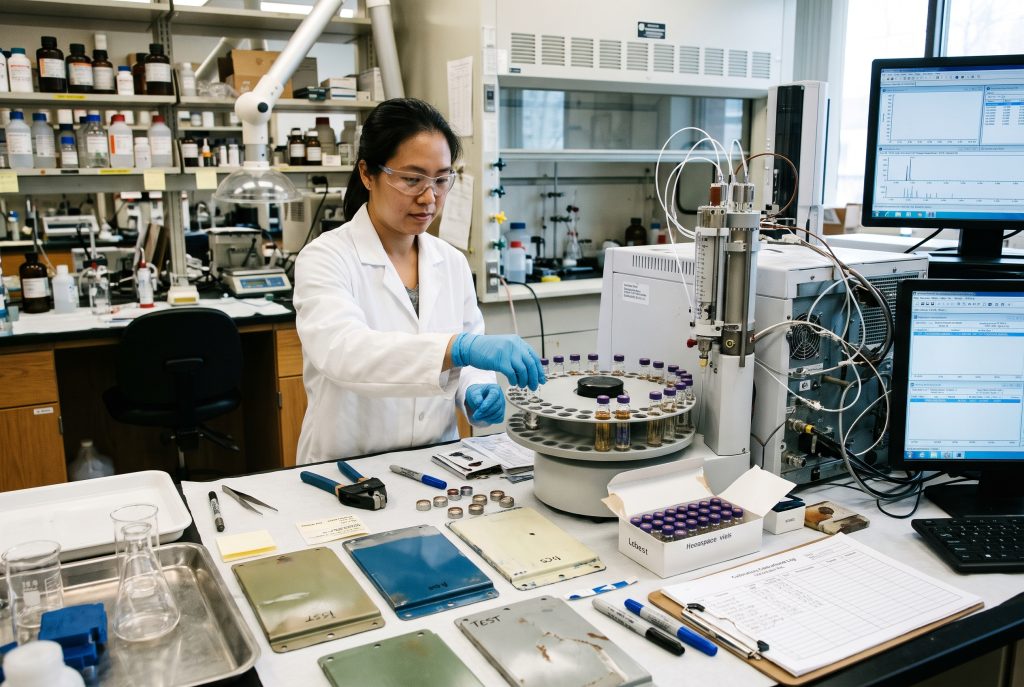
Synthetic coatings, protective primers, elastomeric seals, and structural bonding agents are engineered from complex chemical formulations designed to withstand harsh operating environments. However, even after these materials appear completely dry or cured, trapped residual solvents and unreacted monomers can continue evaporating into the surrounding air for months or years. A VOC test is a specialized analytical laboratory method that isolates, identifies, and measures these Volatile Organic Compounds under controlled thermal and environmental conditions. By verifying exact chemical release profiles before materials enter commercial production, manufacturers prevent workplace health hazards, optical surface contamination, and costly regulatory rejections.
Uncontrolled off gassing creates both biological and mechanical risks. Beyond degrading indoor air quality for end users and factory personnel, reactive organic vapors can degrade adjacent polymer components, trigger unpleasant chemical odors, and violate strict international environmental directives across European, North American, and Asian export markets.
Primary Emission Categories Monitored in Surface Formulations
Analytical chemists evaluate multiple chemical classes released from paints, rubbers, and bonding resins depending on the intended application environment.
- Aromatic Hydrocarbons and Residual Solvents: Compounds such as toluene, xylene, styrene, and ethylbenzene frequently originate from industrial thinners, spray coatings, and adhesive carriers. Detecting trace solvent retention confirms whether factory curing ovens and ventilation cycles are functioning effectively.
- Aldehydes and Ketones: Formaldehyde, acetaldehyde, and acetone commonly form during resin cross linking, polyurethane foam curing, and rubber vulcanization. Because these lightweight molecules carry severe respiratory irritation risks, international health guidelines impose exceptionally strict concentration thresholds.
- Condensable Plasticizers and Fogging Agents: Heavier organic molecules evaporate slowly when subjected to sustained radiant heat and subsequently condense as an oily film on cooler nearby surfaces. Measuring these semi volatile emissions protects glass windshields, lighting reflectors, and sensitive sensor optics from permanent hazing.
Manufacturing Industries Requiring Material Emissions Verification
Objective emission profiling supports product safety, environmental stewardship, and global supply chain qualification across diverse industrial sectors.
- Protective Coatings and Industrial Paint Production: Formulators developing low emission primers, powder coatings, and automotive refinish systems rely on accredited emission testing to validate green product claims and comply with national air pollution regulations.
- Aerospace and Rail Transit Engineering: Sealed passenger cabins in commercial aircraft and high speed trains expose travelers to recirculated air for extended durations. Qualifying structural adhesives, floor sealants, and acoustic insulation ensures cabin air remains free from toxic chemical buildup.
- Elastomer and Molded Seal Manufacturing: Synthetic rubber gaskets, weatherstrips, and vibration dampers undergo intense thermal cycling during daily service. Environmental chamber evaluations verify that vulcanization accelerators and processing oils do not leach hazardous vapors over time.
- Industrial Packaging and Flexible Films: Laminated pouches, protective liners, and heavy duty shipping cartons utilize industrial inks and solvent based adhesives. Screening packaging substrates ensures volatile residues do not migrate into enclosed electronics, medical supplies, or consumer goods during overseas transit.
Proving that raw coatings and adhesives meet stringent international emission thresholds is essential for securing global manufacturing contracts and safeguarding brand trust. By scheduling an accredited voc test through Alstesting Voc testing services in Malaysia, chemical formulators and industrial suppliers gain the certified, third party analytical data needed to validate material safety and maintain seamless export compliance across Southeast Asia.
Frequently Asked Questions (FAQ)
How does headspace gas chromatography measure residual solvents in adhesives?
Analytical chemists seal a precisely weighed specimen inside an airtight glass vial and heat it to a standardized temperature until volatile molecules reach equilibrium in the gas space above the sample. An automated syringe then injects that vapor directly into a gas chromatography mass spectrometry instrument to separate and quantify every individual solvent present.
How does curing temperature affect volatile emissions in industrial paints?
Insufficient baking temperatures or shortened oven dwell times leave uncured resins and liquid carrier solvents trapped beneath the dried surface skin of the paint film. Over time, these trapped chemicals slowly diffuse outward into the environment, resulting in elevated emission readings and persistent chemical odors.
What is the difference between total volatile organic compounds and targeted compound analysis?
Total volatile organic compound measurement calculates the combined overall sum of all organic vapors released within a defined boiling point range, giving a broad snapshot of total chemical output. Targeted compound analysis specifically isolates and quantifies individual high risk substances such as benzene or formaldehyde against strict legal safety limits.
Related Posts

Healthcare Information Security Management: Best Practices for Governance, Risk, and Compliance
Governance in Healthcare Information Security Management Governance in healthcare information…

Information Security in Healthcare: Protecting Data in a Complex Care Environment
Information Security and Healthcare Data Protection Information security in healthcare…

Securing Telehealth Platforms and Remote Patient Monitoring Devices
Telehealth platforms connect patients and clinicians through digital services, while…